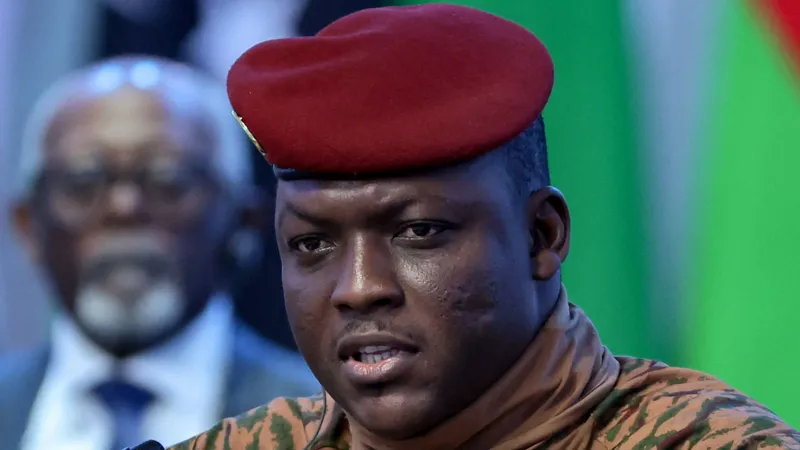
Burkina Faso’s Ibrahim Traoré Dismisses Democracy, Calls for New Governance Approach
Burkina Faso’s military ruler, Ibrahim Traoré, has sparked fresh debate after declaring that democracy “kills” and urging citizens to “forget” the system, in a televised interview aired on state media.
The 38-year-old captain, who seized power during the Burkina Faso coup d’état 2022, argued that democratic governance does not reflect the aspirations of most Africans. He suggested that Burkina Faso is pursuing its own political model, though he did not provide specific details.
“People need to forget about the issue of democracy. Democracy is not for us,” Traoré said, citing instability in countries like Libya as evidence of the system’s shortcomings.
Junta Extends Rule and Suspends Political Activity
Traoré had initially pledged to restore civilian rule by July 2024. However, shortly before the deadline, authorities extended military governance by five years, delaying a return to democratic elections.
In January, the government announced a ban on all political parties, describing the move as part of efforts to “rebuild the state.” Traoré defended the decision, arguing that political parties are divisive and incompatible with his administration’s “revolutionary project.”
“The truth is, politics in Africa… a real politician is someone who embodies every vice,” he said, criticizing traditional political systems.
Push for Alternative Governance Model
While rejecting Western-style democracy, Ibrahim Traoré said his administration is focused on building a system rooted in sovereignty, patriotism, and grassroots mobilization. He emphasized the role of traditional leadership structures and called for increased national self-reliance, both economically and militarily.
The junta leader also highlighted the need for greater productivity, suggesting that shorter working hours would hinder the country’s development compared to wealthier nations.
Rising Concerns Over Human Rights and Security
Despite his growing popularity among some pan-African audiences, Traoré’s government has faced criticism over its handling of dissent. Rights groups, including Human Rights Watch, have accused authorities of suppressing opposition voices, targeting media, and allegedly sending critics to the front lines of the ongoing conflict against Islamist militants.
According to recent reports, more than 1,800 civilians have been killed in Burkina Faso since 2023, with a significant number of deaths attributed to security forces and allied militias, while others are blamed on insurgent groups.
Shift in International Alliances
Burkina Faso, alongside neighbors Mali and Niger, has distanced itself from Western allies, particularly France, in its fight against Islamist insurgencies. The three nations have instead strengthened ties with Russia for military support.
However, analysts note that the security situation remains volatile despite the shift in partnerships, raising questions about the effectiveness of the junta’s strategy.
Ongoing Debate Across Africa
Traoré’s remarks have reignited discussions across the continent about governance, democracy, and sovereignty. While some supporters praise his anti-Western stance and revolutionary rhetoric, critics warn that abandoning democratic principles could deepen instability and limit political freedoms.
As Burkina Faso continues under military rule, the future of its governance model remains uncertain, with growing international and domestic scrutiny over the country’s political direction.
