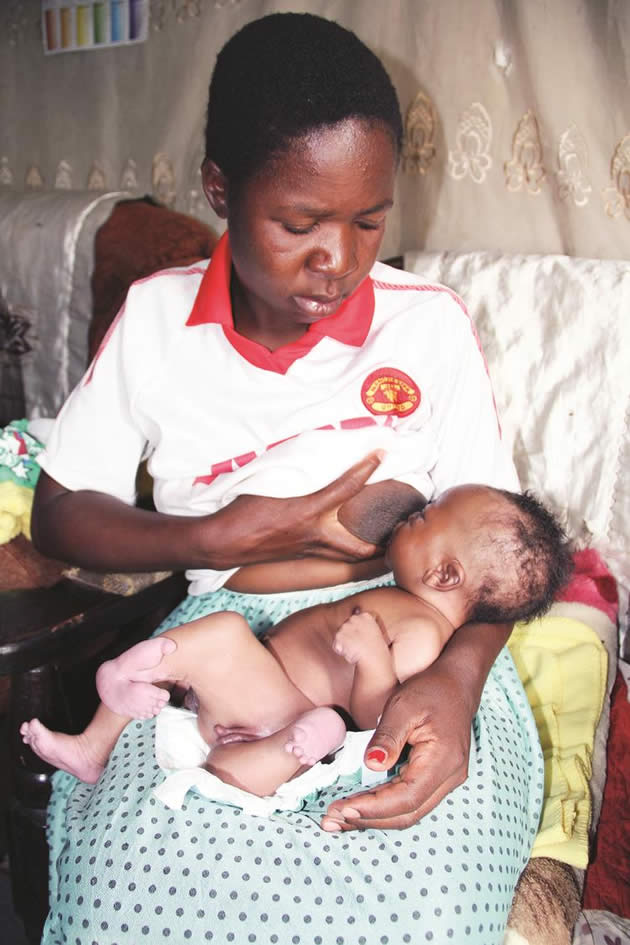
Baby Born With Multiple Body Parts in Zimbabwe Sparks Medical Debate on Rare Condition
A rare and complex birth in Zimbabwe has drawn widespread attention after a baby boy was delivered with multiple body parts, leaving both medical professionals and the local community searching for answers.
The child, born on December 4, in Mhondoro, a rural area in Mashonaland West Province, was delivered at Marisamhuka Clinic before being transferred to Harare Central Hospital for specialized care.
According to reports, the baby—named Tinashe, meaning “God is with us”—was born with two hearts, three legs, four feet, two male reproductive organs, and protruding intestines. Medical staff described the case as extremely rare, with initial assessments suggesting a complex congenital abnormality.
The child’s mother, Grace Zimbowa, 35, expressed both shock and deep emotional distress following the birth, but affirmed her commitment to caring for her son. The baby’s father, Charles Mayenzo, also acknowledged the difficulty of the situation while emphasizing the family’s determination to seek medical help.
Doctors at Harare Central Hospital indicated that the condition is likely linked to a phenomenon in which twins fail to fully separate during early pregnancy, resulting in what is medically referred to as a congenital malformation.
Portia Manangazira, a senior official in the Ministry of Health, explained that such abnormalities typically occur during the initial stages of fetal development when genetic or developmental disruptions prevent proper separation of twins.
Despite the complexity of the condition, local surgeons successfully performed an initial procedure to remove the protruding intestines, and the baby is currently recovering. However, specialists have advised that further corrective surgeries may require advanced treatment abroad.
The family now faces significant financial challenges, with estimates suggesting that additional surgery could cost up to $130,000 in countries such as India—far beyond their means. They have since appealed for assistance from humanitarian organizations, including the Red Cross Society.
Medical experts emphasize that while such cases are rare, they are documented within the field of congenital disorders and are not linked to superstition, despite speculation within some community circles.
As the case continues to attract attention, health professionals stress the importance of prenatal care and early medical screening to detect and manage potential complications during pregnancy.
