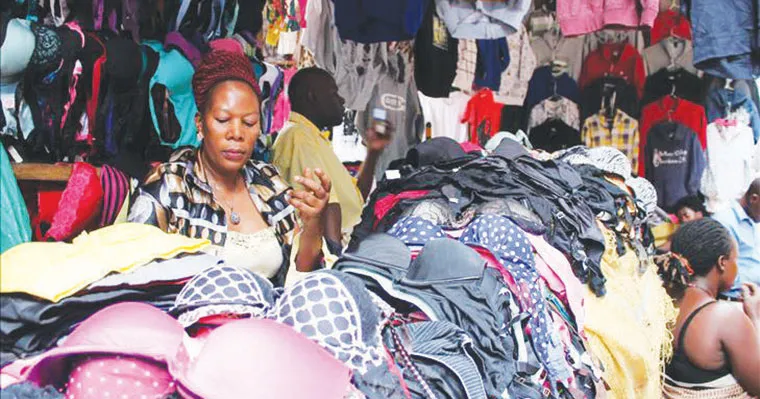
In the bustling corridors of St. Balikuddembe Market, commonly known as Owino, the anatomy of Uganda’s second-hand clothing trade comes vividly to life. Here, the fate of every imported bale—or endibota—is not decided in distant offices, but by the skilled hands of sorters who transform bulk imports into a complex, multi-tiered economy.
At the bottom of this value chain lies “fagi”—torn, stained, or outdated items. While the least desirable, fagi is a critical pillar of affordability and recycling, especially in a country where 16.9% of the population lives below the poverty line.
A recent study by Gateway Research Centre highlights the intricate ecosystem behind this trade. Imported bales, weighing between 45kg and 100kg, are pre-graded abroad into First Class (Cream), Second Class, and Third Class. Yet the final, most important grading happens in Ugandan markets.
“When I opened the bale, most of it was fagi; I made losses this time,” a trader in Owino told researchers, reflecting the high-stakes gamble inherent in each purchase.
A single bale can yield a spectrum of outcomes. A shipment of second-hand jeans, for example, might include 30% first-class (branded, clean), 50% second-class (usable but faded), and 20% third-class (fagi). Once sorted, even the lowest-grade items are further sub-categorized.
The base of the pyramid splits into rags and outright waste, feeding a secondary recycling economy.
“We try to use everything. Even the rags have a market with mechanics and cleaning companies,” said Maama Joan, a vendor in Jinja. Another trader in Masaka added, “Sometimes you open a bale and end up with a lot of fagi—things even the poorest won’t buy. We cut them up for rags or sell them to garages.”
This “fagi economy” is essential for both traders and consumers. Low-income buyers can purchase clothing for as little as Shs 500 (~US$0.13), while traders mitigate total loss on poor-quality bales. Many goods are sold by intermediaries known as abalanguzi, who distribute low-grade items in village markets.
Yet the system faces immense pressure from Uganda Revenue Authority’s (URA) blunt per-kilogram tax model, which does not differentiate between high-value bales and unsellable fagi. Traders are charged $0.89/kg, regardless of market value, making fagi a financial burden.
“URA does not care what is inside the bale. Whether it’s full of small, unsellable bags or torn clothes, you pay the same high tax,” said Naigaga, a bag seller in Jinja.
Experts argue that targeted policy reforms are urgently needed to support this economically vital ecosystem:
-
Differentiate Taxes by Bale Grade: URA should abandon the one-size-fits-all model. Third-class or fagi bales should attract minimal symbolic taxes, while higher rates apply to first and second-class items.
-
Formalize the Recycling Value Chain: Parliament could promote eco-friendly disposal and upcycling initiatives through partnerships with NGOs or private enterprises, turning waste into green entrepreneurship opportunities.
-
Integrate Informal Sorters and Abalanguzi: Local authorities and market associations should create recognized trading spaces for lower-grade items, giving informal actors access to better conditions and regulatory support.
The sorting sheds of Owino are more than distribution points for second-hand clothing—they are the engine of an entire economy that serves millions. Smart regulation would not eliminate fagi, but instead recognize its vital role, allowing the entire ecosystem—from cream to rags—to thrive sustainably and equitably.
