**Leader of Ecuador’s Notorious Drug Cartel ‘Los Lobos’ Captured in Spain in Major International Operation**
In a significant breakthrough in the battle against organized crime, Wilmer “Pipo” Chavarria, the feared leader of one of Ecuador’s most powerful drug-trafficking organizations, Los Lobos, has been arrested in Spain, Ecuador’s President Daniel Noboa confirmed on Saturday.
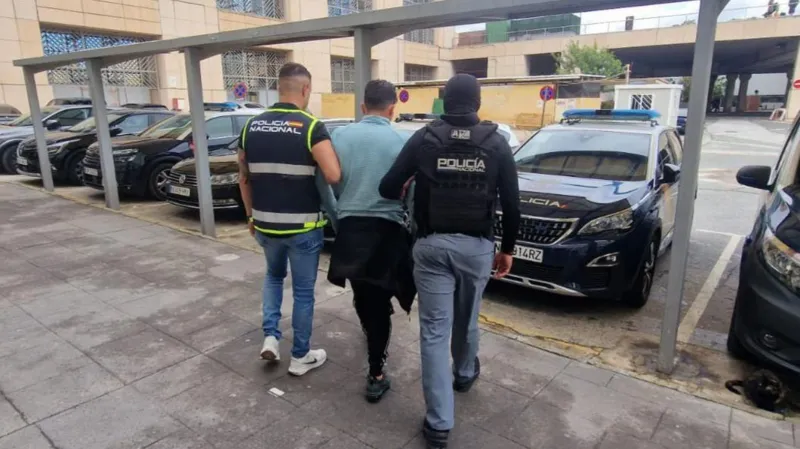
Chavarria, who had been a key figure in Ecuador’s burgeoning criminal underworld, was detained in the Spanish city of Malaga following a coordinated operation by Spanish National Police and Ecuadorian authorities. The capture marks a critical moment in the ongoing international efforts to dismantle the violent and expansive drug cartels operating across Latin America.
Faking His Death to Evade Capture
The capture of Chavarria is especially significant as it exposes a cunning tactic he had used to evade justice. In 2021, Chavarria’s family falsely claimed that he had died from a heart attack related to Covid-19. The ruse allowed him to disappear under a new identity while continuing to control criminal activities in Ecuador, including drug trafficking, illegal mining, and orchestrating targeted killings.
President Noboa praised the arrest as a “historic day” for Ecuador, hailing it as a major victory in the nation’s fight against the gang violence that has plagued the country in recent years. The leader of Los Lobos had been operating in the shadows of Europe, but his network of criminal activities continued to thrive in Ecuador, particularly as the country became a key hub for cocaine trafficking.
The Rise of Los Lobos
Los Lobos, or “The Wolves,” is one of the largest and most dangerous criminal syndicates in Ecuador, with an estimated 8,000 members. The gang, which has been involved in a wide range of criminal activities, was designated as a terrorist organization by both Ecuador and the United States. In June 2024, the U.S. Treasury sanctioned the group, citing its central role in escalating violence across Ecuador, a country that has become increasingly notorious for its deadly drug-related turf wars.
Ecuador has witnessed a sharp increase in violence and murders in recent years as rival gangs battle for control over the lucrative drug trade, particularly cocaine, which is trafficked through the country from neighboring Peru and Colombia. While Ecuador does not produce cocaine itself, its strategic position as a transit hub has made it a key player in the international drug trade.
Impact of the Arrest and Growing International Tensions
Ecuador’s Interior Minister, John Reimberg, who was in Spain with local law enforcement at the time of the arrest, expressed his pride over the successful operation. Reimberg called it a “historic day” for Ecuador, acknowledging the global collaboration necessary to combat such expansive criminal organizations.
The arrest of Chavarria coincides with a critical moment in Ecuador’s ongoing battle against organized crime. As the country grapples with escalating violence, President Noboa has ramped up efforts to combat drug cartels, including a controversial military crackdown on gangs. His administration has defined itself by an aggressive stance against criminal organizations, and the arrest of Chavarria is seen as a symbol of his commitment to restoring order.
The timing is also noteworthy given that a national referendum is underway in Ecuador, which will decide whether the country’s constitution should be amended to allow foreign military bases to return to Ecuador. The U.S. previously operated a military base on Ecuador’s Pacific coast until 2009, when then-President Rafael Correa shut it down. The U.S. has since increased its military presence in the region, particularly in efforts to combat drug trafficking.
Ecuador’s ‘War’ on Narcotrafficking
President Noboa has expressed a desire to strengthen Ecuador’s ties with U.S. and European military forces to assist in his country’s fight against what he has described as “narco-terrorists.” U.S. Homeland Security Secretary Kristi Noem recently visited military facilities in Ecuador, underscoring the growing cooperation between the two nations in tackling the global drug trade.
The U.S. has also ramped up its military operations in the Caribbean and Eastern Pacific, with the deployment of troops and a naval strike force centered around the USS *Gerald Ford* aircraft carrier. These operations have included at least 20 strikes on suspected narcotrafficking vessels, leading to the deaths of at least 80 people, though the U.S. has not disclosed specific details about those targeted. The legality of these strikes has been questioned by some, with legal experts suggesting they may violate international law.
A Cartel with Global Reach
The arrest of Chavarria sends a strong message to other criminal organizations in the region, but the battle is far from over. Los Lobos continues to operate in Ecuador’s prisons, with several gang members behind bars, and the group is thought to have orchestrated some of the country’s bloodiest prison riots. The cartel is also believed to have ties to the infamous Jalisco New Generation Cartel (CJNG) in Mexico, a transnational drug network that has had a significant influence on the operations of many Latin American gangs.
With Chavarria’s arrest, Ecuadorian authorities are hopeful that they can take further steps toward dismantling Los Lobos and other powerful gangs, but the true test will be whether the country can curb the violence and regain control of its territories from these ruthless criminal organizations. The capture of the drug lord is undoubtedly a key moment in the fight against narcotrafficking, but as always, the success of the operation will ultimately depend on its long-term impact and the ability to secure a lasting peace for the people of Ecuador.
