**Top Story: Trial of Alleged ADF Commander Jamilu Mukulu Begins After 11-Year Delay**
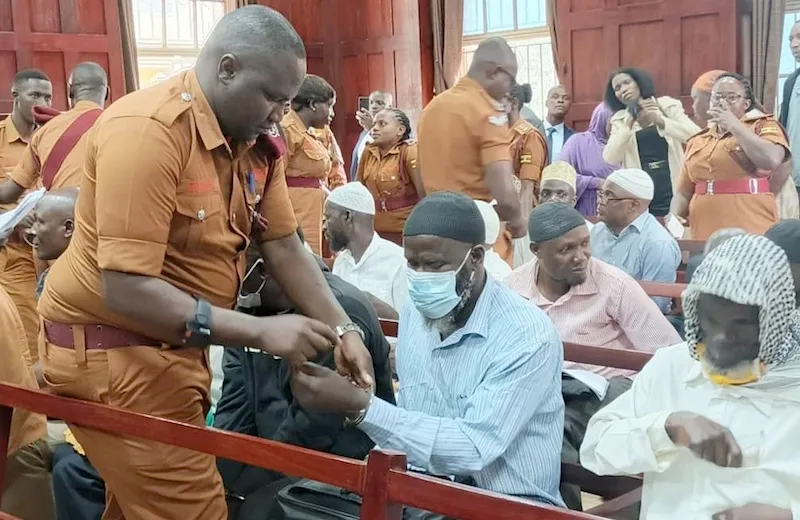
After nearly eleven years of delays and remand, the long-awaited trial of Jamilu Mukulu, a key figure in the notorious Allied Democratic Forces (ADF), finally commenced on Monday at the International Crimes Division (ICD) of the High Court in Kampala.
Mukulu, the lead defendant among 37 individuals, faces an array of grave charges including terrorism, murder, and aggravated robbery. The indictment accuses him and his co-accused of engaging in a violent campaign between 2011 and 2014, which saw the acquisition of firearms, military training abroad, and funding for operations driven by political, religious, and social motives.
Among the charges are the high-profile murders of prominent Muslim clerics Sheikh Yunus Abubaker Mandanga and Sheikh Dakitoor Muwaya, a leading Shia religious figure. The accused group is also linked to the deadly attack on Bugiri Police Station in which officers Karim Tenywa and Muzamir Babale were killed. The charges stretch back to the 1998 ADF assault on Kichwamba Technical Institute, where over 80 students lost their lives.
While some defendants have pleaded guilty and received sentences, the core group, including Mukulu, had not yet faced trial, despite their formal commitment to court back in September 2019.
### Initial Testimony: A Heart-Wrenching Account of Murder
The trial began under tight security, with the courtroom and surrounding areas near the Sheraton Hotel roundabout heavily guarded by police and Counter-Terrorism units. The panel of judges—justices Michael Elubu, Dr. Andrew Bashaija, Susan Okalany, and Stephen Mubiru—overseen the opening proceedings.
The prosecution, led by Chief State Attorney Richard Birivumbuka and Assistant Director of Public Prosecutions Thomas Jatiko, called their first witness, Vincent Ekweny, a gold miner from Namavundu, Namayingo District. Ekweny provided an emotional account of the February 2015 murder of his uncle, Tito Okwale, the LC III chairperson of Buyinja Sub-County.
Ekweny described the evening of February 1, when he and his uncle returned from a day of gold mining. After settling in at Okwale’s home, the two men were interrupted by a motorcycle carrying three individuals. The motorcycle circled the compound, returning later with only two men. One of them approached Ekweny before walking toward Okwale, who was sitting outside, and shot him dead.
In vivid detail, Ekweny recalled how his uncle collapsed after the gunshot, uttering a final gasp before the assailant fired additional shots into his body. Fearing he was next, Ekweny fled the scene. His testimony revealed local frustrations with the police’s delayed response, as residents reportedly chased the officers away upon their arrival.
Ekweny also provided a crucial identification during a police lineup at Nalufenya police station, where he pinpointed the alleged killer—accused number one, Ali Kabambwe (also known as Munakenya)—as the man responsible for his uncle’s death.
Emotional and tearful as he recounted the tragedy, Ekweny’s testimony marked a poignant start to what promises to be a high-stakes trial.
### Adjournment
Following the gripping testimony, defense attorney Caleb Alaka requested an adjournment, citing the need for more time to prepare for cross-examination, and pointing out that neither he nor the court had taken lunch. The proceedings were consequently adjourned.
With the trial now underway after a long wait, the court will continue to hear more testimonies as the accused face justice for their alleged roles in one of Uganda’s most violent insurgent groups.
