
**Breaking: Groundbreaking Gene Therapy Gives New Hope to Boy with Rare Disease**
Stem cell removal – December 2024
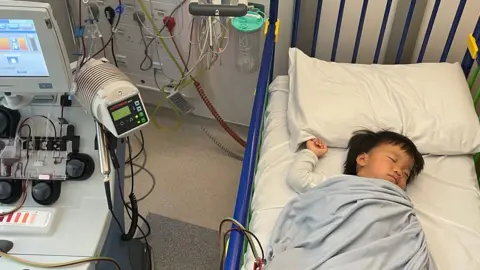
A three-year-old boy has stunned doctors and the medical community after becoming the first person ever to receive a world-first gene therapy for Hunter syndrome, a rare and life-threatening genetic disorder. Oliver Chu, from California, was diagnosed with the condition at just two years old, a disease that causes irreversible damage to the body and brain. In the most severe cases, it can be fatal by the age of 20, often leading to severe mental and physical decline.
Oliver’s treatment marks a groundbreaking moment in the fight against rare genetic disorders. His condition, Hunter syndrome (MPSII), is caused by a genetic mutation that prevents the production of a vital enzyme, which is responsible for breaking down complex sugars in the body. This enzyme deficiency leads to the accumulation of waste products in cells, causing severe damage to tissues and organs.
Before his treatment, Oliver, like other children with Hunter syndrome, faced an uncertain future. He was unable to produce the enzyme iduronate-2-sulfatase (IDS), which plays a crucial role in keeping cells healthy. But in a historic trial led by doctors at Royal Manchester Children’s Hospital, Oliver became the first patient in the world to receive a revolutionary gene therapy designed to alter his DNA and enable his body to produce the missing enzyme.
Oliver’s cells are tweaked
Prof. Simon Jones, co-leader of the trial, expressed his excitement: “I’ve been waiting 20 years to see a boy like Ollie doing as well as he is, and it’s just so exciting.”
The Chu family, who had traveled all the way from California to Manchester, put their trust in the pioneering medical team, hoping that this new therapy would provide Oliver with a chance at a normal life. The treatment, which was years in the making, required removing stem cells from Oliver’s blood, genetically modifying them in a lab, and then infusing them back into his body.
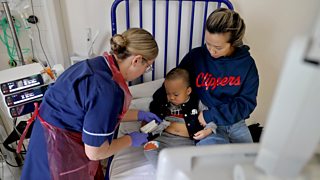
Infusion day – February 2025
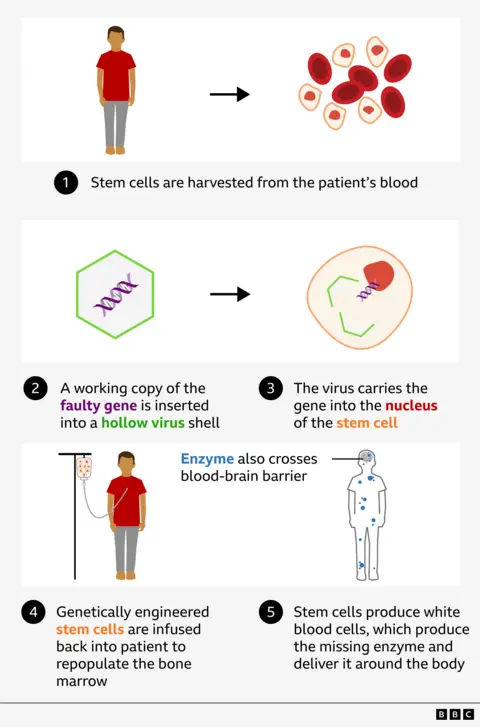
The gene therapy works by inserting a functional copy of the faulty gene into Oliver’s stem cells using a virus. These modified cells then repopulate his bone marrow, producing healthy white blood cells capable of generating the missing enzyme. The therapy also includes modifications to help the enzyme cross the blood-brain barrier, which is one of the major challenges in treating neurological symptoms of the disease.
After the infusion, doctors and the Chu family anxiously awaited results—and the outcome has been nothing short of extraordinary. Just months after the treatment, Oliver has shown remarkable improvements in speech, mobility, and cognitive development.
Early signs of progress – May 2025
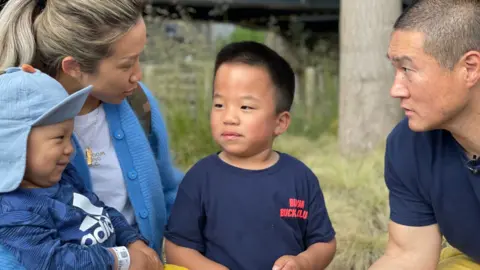
“We’ve seen him maturing and progressing so much,” says Ricky, Oliver’s father. “He’s talking more, engaging with others, and seems like a completely different child.”
The progress has been so dramatic that, for the first time, Oliver was able to stop receiving weekly enzyme infusions, a crucial step in managing the disease. His mother, Jingru, emotionally reflects, “I want to pinch myself every time I tell people that Oliver is making his own enzymes. It’s just so amazing.”
Oliver’s incredible recovery has not only brought joy to his family but has given hope to other families dealing with rare diseases. At the moment, Oliver is one of five boys worldwide who are part of the clinical trial, with each of the boys receiving the gene therapy to see if it can halt or reverse the effects of Hunter syndrome. The success of this trial could change the future of gene therapy for rare genetic conditions, offering hope to children who would otherwise have no treatment options.
‘Eternally grateful’

As Oliver’s condition continues to improve, his family remains hopeful that his older brother, Skyler, who also has Hunter syndrome, may one day benefit from the same groundbreaking treatment. Ricky, with tears in his eyes, says, “It feels like Oliver has gotten a reset in his life, and I want the same for Skyler, too.”
The research that led to this remarkable breakthrough almost didn’t happen. The project faced a major setback in 2023 when the biotech company originally sponsoring the trial pulled out due to funding issues. But thanks to the swift action of researchers at the University of Manchester and crucial financial support from the charity LifeArc, the trial was saved.
The trial that almost never was
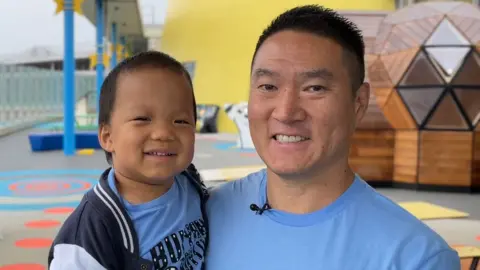
Prof. Brian Bigger, who led the gene therapy research at the university, explains, “This was a race against time. Without the funding, the trial would have been at risk. But we are incredibly grateful to LifeArc for stepping in and making this possible.”
With continued funding and support, researchers hope that this new treatment will be licensed and made available to more children with Hunter syndrome in the future. The success of the trial could also open doors for gene therapies to treat other rare genetic diseases, such as Hurler syndrome and Sanfilippo syndrome, which are similarly caused by enzyme deficiencies.
For now, Oliver’s progress is nothing short of a miracle. His parents, Ricky and Jingru, say they are “eternally grateful” to the medical team in Manchester for giving their son a chance at a better life. “It’s everything we dreamed of and more,” Ricky says. “Oliver’s life is no longer dominated by hospital visits. His speech, his movement, his cognitive abilities—he’s a completely different child.”
As the trial continues, researchers remain cautious, knowing that it will take time to understand the full impact of the treatment. But for now, the Chu family has reason to hope, and their story is a powerful reminder of how far medical science has come in the battle against rare and devastating diseases.
