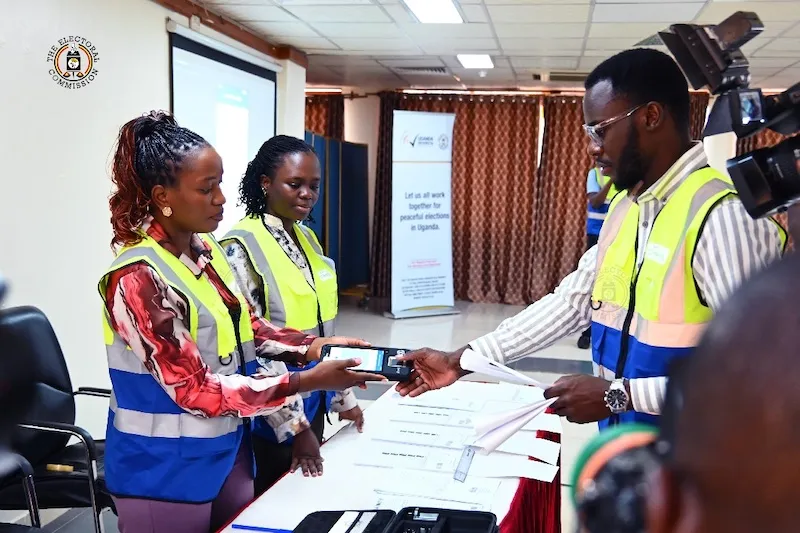
Uganda’s 2026 Election: Biometric Voter Kits Face Major Trust and Technical Hurdles
Wakiso, – On Election Day in 2021, at a polling station in Wakiso, a biometric voter verification kit failed to recognize a woman’s fingerprints. Despite multiple attempts and a restart of the system, the woman’s identity could not be verified. The presiding officer switched to manual verification, but the lingering doubt about the machine’s reliability became palpable. As the 2026 general election approaches, that uncertainty is casting a long shadow over Uganda’s election preparations.
A Growing Distrust in Election Technology
The once-promising biometric voter verification kits (BVVKs) were touted as the solution to Uganda’s most persistent electoral challenges—preventing multiple voting, impersonation, and the presence of ghost names on voter rolls. These devices are designed to match voter fingerprints or facial data to the national register. However, years of deployment have been marred by technical glitches, network issues, and poor usability, leading to widespread confusion and concern.
In a tense parliamentary session last week, Leader of the Opposition Joel Ssenyonyi asked a crucial question: “How can we place so much trust in a machine we don’t fully understand?” His concerns weren’t just about technology; they were about trust in the electoral process itself.
BVVKs: A Technology Shrouded in Mystery
Biometric kits were supposed to be a breakthrough in Uganda’s electoral system, but their performance has been far from flawless. Ssenyonyi pointed out that the machines have been plagued with errors, from network failures to unexplainable glitches. The Electoral Commission (EC) has been slow to address these issues, and there is little clarity on the procedures for backup or how to handle machine failures on Election Day.
To make matters worse, the Electoral Commission’s recent request for over 1,000 trainers just months before the 2026 election raised alarms. Even government ministers like Henry Musasizi admitted to not understanding how the systems would function. “We were shocked,” said MP Ssemujju Nganda.
Rushed Planning and Missing Resources
The Electoral Commission’s late-stage scramble for funding and logistical support adds to the mounting anxiety. In a stunning revelation, the EC announced it needs Shs 469 billion to create 15,256 new polling stations—only weeks before the election. Lawmakers questioned how such critical planning gaps could exist after five years of preparation.
Ssenyonyi’s question to the EC echoed concerns shared by many: “How can we trust the process when we don’t know how these machines work?”
A Critical Chain of Trust Under Threat
When a biometric kit fails at a polling station, it’s not just the error code that causes concern—it’s what that failure represents: uncertainty. This is especially true in a country with a politically sensitive history like Uganda. The system’s failure to work reliably could fuel suspicion, disrupt the voting process, and lead to conflict.
BVVK failures have already caused chaos in other African nations, including Nigeria, Ghana, and Kenya, where biometric systems malfunctioned during elections. In Uganda, where political tensions run high, the risk of unrest could escalate if the system fails again.
Data Security Concerns: Who Owns Your Biometrics?
Another growing concern is the security of the biometric data itself. MP Muhammad Nsereko raised alarm over the involvement of foreign companies, potentially from China, in the handling of sensitive biometric data. In a country where biometric authentication is becoming ubiquitous—used for everything from SIM cards to bank transactions—the fear of data breaches is not unfounded. “Who controls my biometric data, and how secure is it?” Nsereko questioned.
A Parliament Left in the Dark
Even the Speaker of Parliament, Anita Among, expressed frustration at the lack of clarity regarding how the BVVKs work. “We need training for members of parliament,” she emphasized, signaling that if the country’s leaders don’t fully understand the technology, the public is even more at risk.
The Challenge of Voter Identification
Another pressing issue is Uganda’s National ID system. Millions of Ugandans are still without National IDs, and without them, the biometric kits cannot verify voters. The EC has promised solutions, but past performance has been disappointing. The potential for further disenfranchisement is high if voters face rejection at polling stations due to missing or damaged IDs.
A Nation on the Brink of Crisis
Uganda’s political climate is volatile, and the introduction of biometric voter verification could either bolster or undermine the electoral process. While the goal of reducing fraud and improving accuracy is laudable, the implementation has been anything but smooth. If the BVVKs are mandated for the 2026 elections, the risk of confusion, frustration, and even violence grows exponentially.
EC Reassures the Public Amid Growing Concerns
As pressure mounts, the Electoral Commission has tried to reassure the public. In a recent statement, EC spokesperson Julius Mucunguzi emphasized the steps being taken to prepare for the 2026 election, including recruiting over 51,000 machine operators for intensive training. The Commission has also ordered over 109,000 biometric kits, ensuring that each polling station will have two machines to mitigate the risk of failure.
The Road Ahead: What Needs to Be Done
Experts warn that Uganda still has a narrow window to get things right. Urgent steps must include:
-
Public demonstrations of BVVKs for MPs, civil society, and journalists
-
Clear protocols for handling machine failures on Election Day
-
Intensive training for polling officials, especially in rural areas
-
Clear public communication on machine functionality, data security, and vendor details
-
Stress-testing in areas with poor network connectivity
Without these measures, the question remains: Can Uganda’s biometric voting system be trusted to secure the 2026 election?
