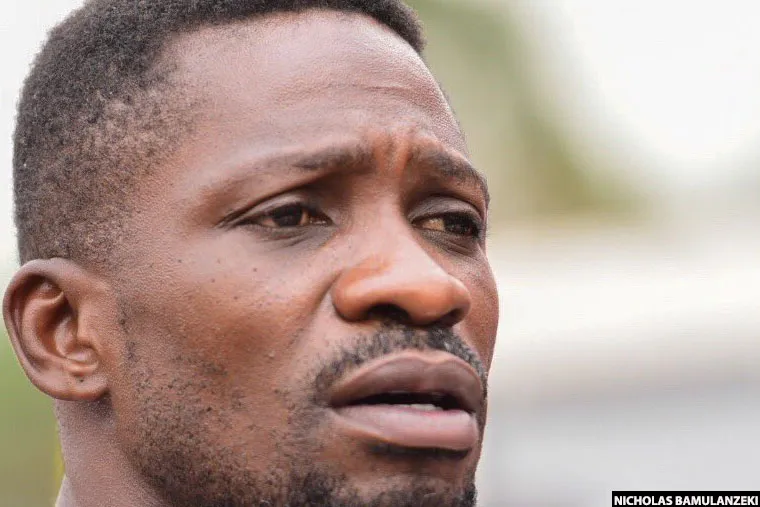
What Exactly Is Bobi Wine’s Crime? Inside Uganda’s Post-Election Crackdown
Magere, Uganda — Each morning in Magere, the gates of opposition leader Robert Kyagulanyi Ssentamu, popularly known as Bobi Wine, no longer open to the rhythms of ordinary political life. Instead, they open onto silence, soldiers, and fear.
Since Uganda’s January 15, 2026 presidential election, armed security forces have surrounded Kyagulanyi’s home, scaling fences, occupying the compound, and conducting repeated raids. The opposition leader, who challenged President Yoweri Museveni in the vote, fled his residence days after the election and has since remained in hiding.
As Uganda enters a tense post-election period, a central question dominates public debate and international concern: what, exactly, is Bobi Wine accused of?
Bobi Wine and the 2026 Uganda Election
Kyagulanyi was Museveni’s most prominent challenger in an election that extended the president’s four decades in power. The Electoral Commission nominated eight candidates in September 2025, narrowing a field of more than 200 initial aspirants.
Officially, the election followed constitutional procedures, including universal suffrage and secret ballots. Museveni was declared the winner with approximately 71 percent of the vote. However, the aftermath has been marked by widespread arrests, disappearances, and allegations of intimidation targeting the opposition.
Human rights groups and opposition figures report that more than 500 supporters of the National Unity Platform (NUP) were arrested before and after polling day. In now-deleted social media posts, the Chief of Defence Forces, Gen. Muhoozi Kainerugaba, claimed that 22 NUP supporters had been killed.
Several senior NUP officials have been detained or gone missing. According to Kyagulanyi, Dr. Lina Zedriga Waru, the party’s deputy president for Northern Uganda, was abducted from her home on polling day and remains unaccounted for. Jolly Jacklyn Tukamushaba, deputy president for Western Uganda, was reportedly abducted in Rukiga District a day earlier. In central Uganda, MP Muwanga Kivumbi was arrested, charged, and remanded to Kitalya Prison.
Against this backdrop, Kyagulanyi’s decision to flee his home appears less symbolic than protective.
Raids on Kyagulanyi’s Home in Magere

On January 26, ten days after he went into hiding, Kyagulanyi detailed what he described as a series of military raids on his residence.
He said the first incident occurred on the night of January 16, hours after polls closed.
“When we saw them jumping over our fence that night, I managed to escape,” Kyagulanyi said, adding that soldiers entered the compound but not the house.
He reported additional raids on January 21 and January 23, during which dozens of soldiers allegedly broke down doors, confiscated documents — including academic certificates and land titles — and seized phones, laptops, and CCTV equipment.
Kyagulanyi said his wife, Barbie Kyagulanyi, was held at gunpoint as soldiers demanded to know his whereabouts.
“All these actions by Museveni’s regime are signs of weakness,” he said. “If Museveni claims he won the election, why is he panicking?”
Kyagulanyi maintains that he remains in hiding because his life is at risk.
Army Chief’s Threats and Conflicting Government Statements
The most controversial statements have come from Gen. Muhoozi Kainerugaba, rather than civilian officials. On January 17, he said no one was searching for Bobi Wine. Days later, his position shifted sharply.
He accused Kyagulanyi of having “started a war against the country” and said the opposition leader would “pay for everything he has done.”
In another statement, Muhoozi said he was banning Kyagulanyi from future participation in Uganda’s electoral processes, claiming authority from President Museveni as Commander-in-Chief.
The general denied allegations that soldiers assaulted Kyagulanyi’s wife, saying troops were “looking for her cowardly husband.” He later said soldiers had been instructed to apprehend Kyagulanyi “dead or alive,” language that intensified public alarm.
The Uganda People’s Defence Forces (UPDF) declined further comment. “I have nothing to say about it,” said acting defence spokesperson Chris Magezi.
A Divided Government Response
Within government, messaging has been inconsistent. Information Minister Chris Baryomunsi defended the security presence at Kyagulanyi’s home, saying it was meant to monitor visitors rather than restrict movement.
He denied that Kyagulanyi was wanted by the state and suggested the opposition leader was avoiding political accountability after defeat.
Other ministers have publicly disagreed. Betty Amongi, the Minister for Gender, Labour and Social Development, condemned post-election arrests, violence, and inflammatory rhetoric attributed to senior military officials.
Such actions, she warned, undermine democracy and damage Uganda’s international reputation.
“They make the government appear repressive and dictatorial,” Amongi said, adding that there is growing concern about the country’s democratic trajectory.
What Bobi Wine’s Case Reveals About Uganda’s Politics
Taken together, the raids, arrests, disappearances, and contradictory official statements suggest more than a dispute over election results. They reveal persistent tensions within Uganda’s political system — one that holds elections regularly but struggles to accommodate genuine opposition.
Bobi Wine’s rise from pop star to presidential contender once symbolized generational change and the possibility of peaceful political competition. His current situation underscores how fragile that hope remains.
The government insists he is not wanted. The military speaks of war. Ministers contradict one another. Meanwhile, the opposition leader remains in hiding, his home repeatedly raided, and his allies detained or missing.
If Bobi Wine has committed a crime, no formal charge has been publicly presented or tested in court.
What is clear is the broader message: in Uganda today, challenging entrenched power can still carry a heavy personal cost — raising urgent questions not only about who won the election, but about the political future being shaped in its aftermath.
