**Breaking:** US Envoy Jared Kushner Returns to Israel Amid Growing Obstacles to Gaza Ceasefire Talks

Jared Kushner, former US President Donald Trump’s envoy and son-in-law, returned to Israel on Monday, as negotiators face mounting challenges in advancing the fragile Gaza ceasefire deal to its next, more complex phase.
Key issues remain unresolved, including Hamas’s disarmament, the reconstruction and future governance of Gaza, and the potential deployment of an international security force to the region. As negotiations enter a delicate phase, questions loom about whether both Israel and Hamas can make the necessary concessions to move forward.
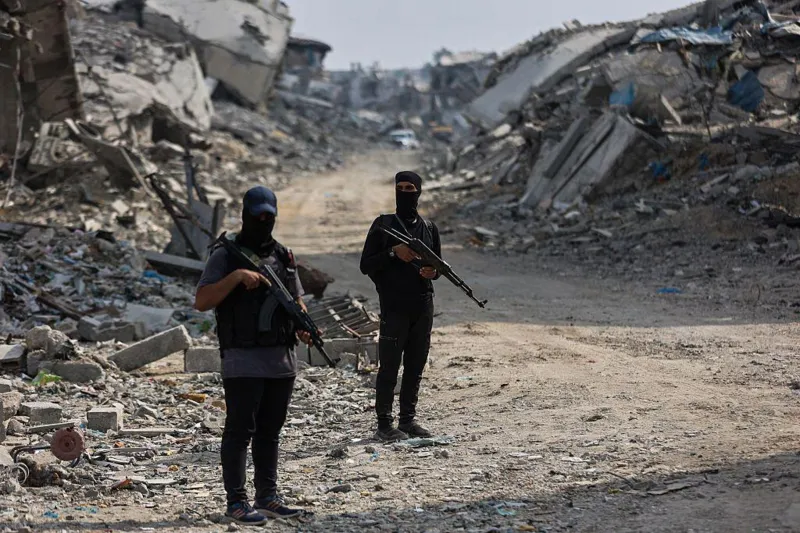
A new hurdle has emerged in the form of Hamas fighters believed to be trapped in tunnels beneath the southern city of Rafah, located behind the so-called “Yellow Line”—an area under Israeli control. According to reports, some 200 fighters are thought to be trapped underground, although this figure has yet to be confirmed.
During a meeting in Jerusalem on Monday, Kushner and Israeli Prime Minister Benjamin Netanyahu reportedly discussed the tunnel issue. Last week, US special envoy Steve Witkoff suggested that Hamas fighters might be offered amnesty if they lay down their arms, presenting this as a potential model for broader negotiations. However, Hamas has refused to surrender, demanding safe passage for its fighters—a request that Israel has rejected.
An Israeli government spokesperson confirmed that Netanyahu and Kushner focused their discussions on the first phase of the plan, which aims to bring home the remaining hostages, while also looking ahead to phase two, which would involve disarming Hamas and ensuring it has no role in Gaza’s future governance.
**The Bigger Picture: Unresolved Issues and Fears of a Gaza Partition**
The conflict in Gaza, which began with the Hamas-led attack on southern Israel on October 7, 2023, has claimed the lives of over 69,000 people in Gaza, according to figures from the Hamas-run health ministry, though the UN considers these figures reliable. The first phase of the ceasefire, which took effect last month, primarily focused on halting the violence, securing humanitarian aid, and returning hostages. Since then, 20 living hostages and the remains of 24 deceased captives have been released. Israel, in return, freed 250 Palestinian prisoners and released more than 1,700 detainees from Gaza who had been held without charge.
Despite these exchanges, both Israel and Hamas have accused each other of truce violations. Israel claims Hamas has delayed the return of hostages’ remains, while Hamas accuses Israel of killing at least 240 Palestinians and obstructing humanitarian aid.
One of the most contentious issues remains the disarmament of Hamas. The group has repeatedly rejected any disarmament until a Palestinian state is established, while Israel insists on the demilitarization of Gaza. This impasse, along with Israel’s refusal to allow the Palestinian Authority to govern Gaza, has left negotiations in limbo.
As the talks drag on without clear progress, some experts fear that Gaza could be de facto divided between areas controlled by Israel and Hamas, with reconstruction efforts limited to Israeli-controlled zones. Such a split could mark the beginning of a permanent partition, a scenario that has raised alarms among Arab countries concerned about the future of Palestinian statehood.
The current US-led plan, which has no provisions for a Palestinian state, has been met with resistance from both sides. Israel rejects the idea of a Palestinian state and has shown reluctance to include the Palestinian Authority in Gaza’s future governance.
As the stalemate continues, there is growing concern that Gaza may remain divided and that the already fragile ceasefire could unravel completely without a breakthrough in talks.
