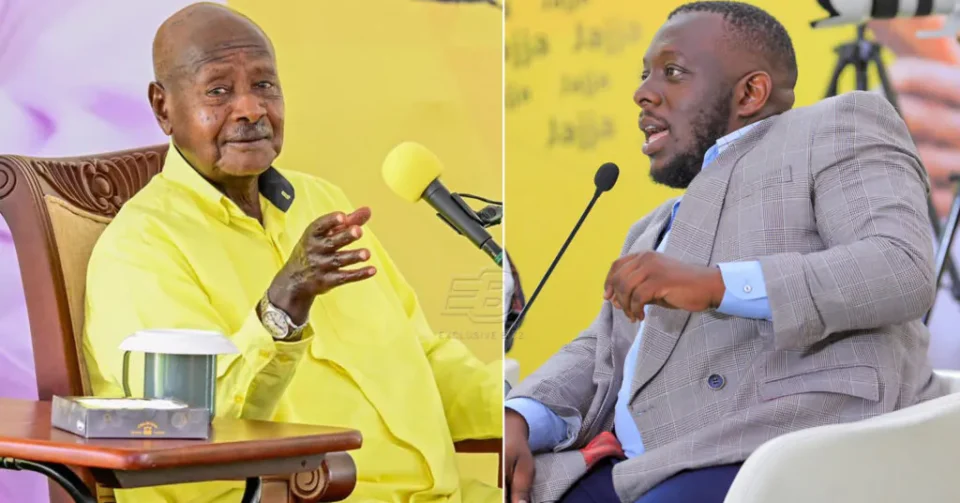
President Yoweri Kaguta Museveni has earlier today declined a request made by renowned Ugandan media personality Isaac Daniel Katende, popularly known as Kasuku, during the Jazz With Jajja youth engagement held at State House.
The high-level meeting brought together several youths from across the country to interact with the President, often referred to as the Fountain of Honour. The dialogue focused on key issues affecting young people, including the continued blockage of Facebook in Uganda and the high cost of internet services.
Kasuku’s Request That Stole the Spotlight
While the session addressed a range of youth grievances, one moment stood out and quickly became the talk of the meeting. Kasuku openly asked President Museveni for “Luseke”, a Luganda word loosely translated as straw, commonly used to mean a token or something tangible given after a meeting with a senior figure.
Kasuku explained that after meeting “Jajja,” there is often an unspoken expectation from supporters that one returns with something to show for it. His remarks sparked laughter and excitement among attendees, but the President responded with a firm stance.
Museveni Explains Why He Said No
President Museveni declined the request, explaining that as a presidential candidate, giving out handouts during a politically sensitive period could be interpreted as bribery.
He emphasized the importance of maintaining integrity and fairness, especially as the country heads toward the general elections.
However, the President reassured Kasuku and the audience that the request was not rejected outright. Museveni promised that he would honor the media personality’s request after the general elections, which are expected to take place on 15th January 2026.
Youth Engagement and National Issues
The Jazz With Jajja session was widely praised for allowing young people to directly engage with the President on pressing national issues. Discussions on social media access, digital costs, and youth inclusion highlighted the growing role of young Ugandans in shaping national discourse.
Kasuku’s interaction with the President has since generated significant buzz online, with many praising Museveni’s explanation and others applauding the media personality for boldly voicing a relatable concern.
As Uganda moves closer to the 2026 elections, such engagements continue to shape conversations around leadership, accountability, and youth participation in governance.
