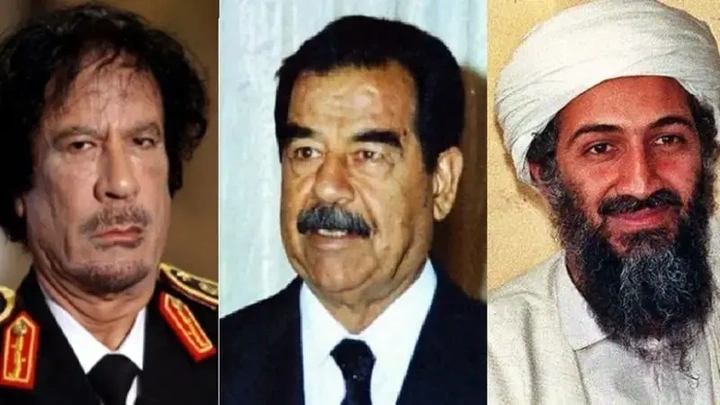
For several years, the United States has been leading operations aimed at capturing or killing leaders of terrorist groups or former presidents accused of various crimes.
Among the people sought for a long time and with great intensity are former Iraqi President Saddam Hussein, former Libyan leader Muammar Gaddafi and former Al-Qaeda leader Osama bin Laden.
US intelligence agencies did everything possible to ensure they achieved their goals of capturing or eliminating these leaders.
But how were these unique operations against these leaders carried out?
Operation against Osama bin Laden
US security and intelligence agencies conducted an operation aimed at capturing or killing Osama bin Laden.
The former Al-Qaeda leader had been wanted for several years for various crimes, including the infamous September 11, 2001 attacks on the United States.
The operation, codenamed “Neptune Spear”, had been planned for months, but was carried out within minutes in May 2011.
A US special forces unit left Afghanistan and traveled at night, arriving approximately 192 kilometers inside Pakistan, where Osama bin Laden was hiding.
The soldiers arrived by helicopter and, in the darkness of night, stormed the house they were targeting. They killed five people, including Osama bin Laden.
After about 40 minutes, they left with Bin Laden’s body along with computer equipment containing intelligence information about Al-Qaeda and its operational plans.
Other bodies were left there, including those of a woman and one of Bin Laden’s children.
They also left behind three women and two children, a boy and a girl, all of whom were handcuffed.
The operation took place on May 2, 2011, after then-US President Barack Obama authorized the attack. Obama gave the authorization on the morning of Friday, April 29.
Before the operation began, US special forces soldiers known as SEAL Team Six departed from the US military base in Jalalabad, Afghanistan, aboard two Black Hawk helicopters that had been specially modified for the operation.
There were also other helicopters accompanying the force, in preparation for any unforeseen situation that might arise.
The helicopters entered Pakistan at midnight, secretly and quietly, until they reached Abbottabad, where Osama bin Laden was believed to be hiding.
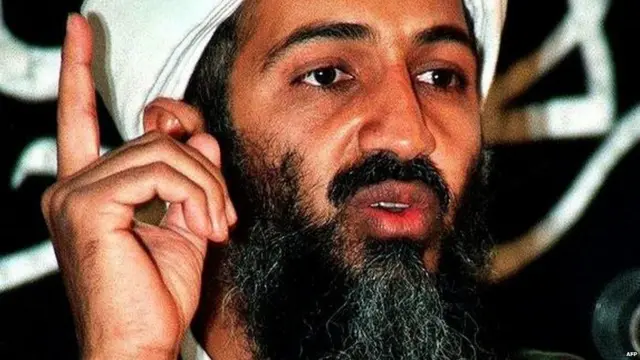
Image source,AFP
The SEAL team, the special forces unit that carried out the attack, was 23.
They were accompanied by an interpreter and a dog trained for military operations, known as Cairo.
The operation involved a helicopter landing on the roof of a large building where Osama was believed to be living, and then soldiers descending using ropes from the helicopter.
The goal was to carry out the operation secretly and quietly, without anyone noticing. However, things did not go as planned, as one of the helicopters experienced a malfunction and made a hard landing. No American service members were killed.
When they arrived at the area, which was surrounded by a high security wall, they entered and began searching one room after another, until they found Osama bin Laden and killed him.
When the CIA launched the operation in May 2011, the US government decided not to notify Pakistan that its helicopters would enter the country’s airspace.
The United States feared that someone might give Bin Laden information about the operation and thus give him a chance to escape.
The Operation to Capture Saddam Hussein
On December 13, 2003, US forces launched an operation known as Operation Red Dawn, near the town of Ad-Dawr, south of Tikrit in Iraq. The operation resulted in the capture of Saddam Hussein alive.
The operation was named after a film released in 1984.
After Saddam Hussein was removed from power during the Iraq war, the US military began a massive manhunt to find him and other officials who served in his regime.
The search continued for several months, with intelligence gathered from prisoners, the military, and local civilians.
Information from a person close to Saddam Hussein, who had been captured, led US troops to a farm in the countryside near the city of Tikrit, Saddam’s birthplace.
The soldiers began by searching two locations where Saddam Hussein was thought to be hiding, before finding him hiding in an underground hole, known as a “spider hole”.
According to military officials, Saddam did not refuse or resist his capture when he was discovered. Instead, he surrendered.
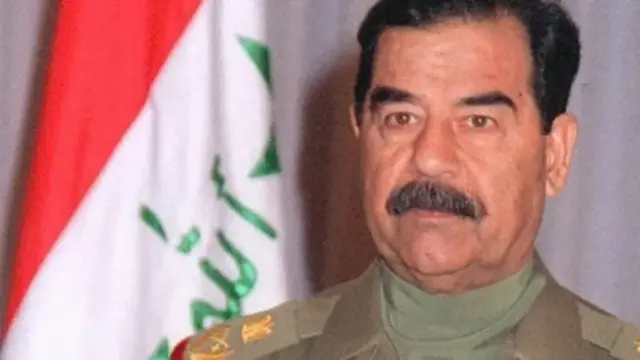
Image source,AFP
Colonel James Hickey, who was leading the operation, said the information that helped them capture Saddam Hussein came from a former close associate who had been captured in Baghdad.
Although the area had been searched previously, it is possible that Saddam was not there at the time, as he was moving from one place to another to avoid detection. This made it difficult for the soldiers searching for him to determine his whereabouts.
When US troops captured Saddam Hussein, they found no communications equipment that would indicate he was still in command of the military. However, that did not prove that he no longer had ties to supporters of his former regime.
Soldiers searching the area where he was hiding found US$750,000 in cash, as well as two Kalashnikov (AK-47) rifles.
Muammar Gaddafi
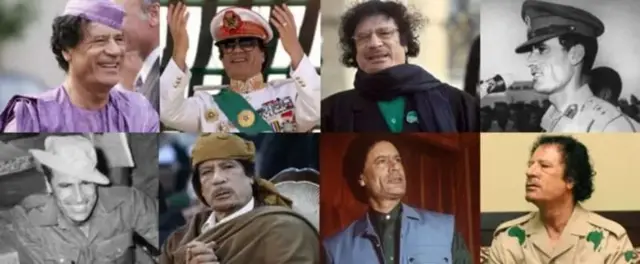
When the Arab Spring movement began in Tunisia in December 2010, Libya was not among the countries expected to be affected by the wave of protests that was spreading across the Arab world.
Muammar Gaddafi had been in power in Libya since 1969, ruling the country as a dictator for more than four decades. While some of his supporters saw his rule as a source of security and stability, his critics accused him of dictatorship and human rights abuses.
When the protests reached Libya in early 2011, they turned into a war where armed groups began fighting against Gaddafi’s government.
The rebels later united under the umbrella of an institution known as the National Transitional Council (NTC), which succeeded in capturing large areas of the country.
As the war intensified, the United Nations Security Council passed a resolution authorizing military intervention in the country with the aim of protecting civilians.
In March 2011, NATO forces, which included troops from the United States, France, and the United Kingdom, were deployed to Libya.
In their operation, they carried out airstrikes against Gaddafi government forces.
These NATO airstrikes helped the rebels advance against government forces, eventually leading to Gaddafi losing power.
Gaddafi fled the capital Tripoli and fled to his hometown of Sirte, which was among the last areas controlled by troops supporting him.
On 20 October 2011, Gaddafi attempted to flee Sirte in a convoy of vehicles. NATO aircraft attacked the convoy, disrupting the journey and scattering the convoy.
After the airstrike, NTC fighters found Gaddafi hiding in an underground water pipe near Sirte. He was captured alive but wounded.
He died shortly afterwards in circumstances that to this day remain controversial.
