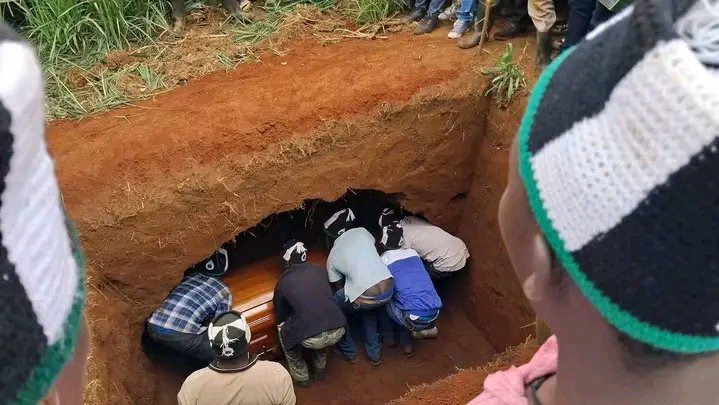
Susan Mugure Wambui Burial: Githunguri Funeral Draws Attention to Agikuyu Traditions

GITHUNGURI, KIAMBU COUNTY — The death and burial of a young mother in Githunguri, Kiambu County, have sparked widespread discussion after residents witnessed funeral rites described as unusual and closely linked to traditional Agikuyu customs.
Susan Mugure Wambui died shortly after giving birth at Kiambu Level 5 Hospital, leaving her family, friends and neighbours devastated by the sudden loss.
Her death came at a particularly painful time, as she had just welcomed a child. The tragedy drew many residents to her funeral, where mourners gathered to pay their final respects.
However, it was the manner in which the burial was conducted that generated considerable interest among those who attended and people who later learned about the ceremony.
Miriga Kenda Tradition Attracts Attention
According to people familiar with Susan’s funeral, her family observed a traditional practice known locally as “Miriga Kenda.” Some members of the community describe the practice as being connected to the “nine clans” in Agikuyu customary traditions.
Residents have offered different interpretations of the practice and its significance.
Some associate it with traditional Agikuyu beliefs concerning the death of a young woman. According to these accounts, a particular customary act sometimes described as “raising a hand” is traditionally believed in some circles to be capable of being followed by misfortune or the premature death of a young woman.
These explanations, however, represent traditional and cultural beliefs passed down through sections of the community. They should not be confused with medical explanations or established evidence concerning the cause of Susan’s death.
Traditional Funeral Rites Surprise Some Mourners
The cultural practices observed during the funeral surprised some mourners, particularly those who had never witnessed similar Agikuyu customary rites.
Large numbers of residents attended the burial, with distinctive traditional clothing forming part of the ceremony.
For some members of the community, the funeral provided an opportunity to observe customs that have continued to survive across generations.
For others, the unfamiliar rites prompted questions about their meaning and the role of traditional practices in contemporary funerals.
How Susan’s Coffin Was Lowered Into the Grave
Another detail that attracted attention was the way Susan’s coffin was lowered into the grave.
Reports from the area indicated that a mechanical device commonly used at modern burials to lower coffins was not used during the ceremony.
The approach taken during Susan’s burial prompted discussion among some mourners and people who later encountered the story online.
The practice was viewed by some as another indication of the traditional nature of the funeral, although the specific cultural meaning attached to the method of burial was not independently established.
Githunguri Residents Remember Susan
Despite the attention surrounding the funeral rites, people who knew Susan personally focused largely on the woman they had lost.
Neighbours described her as lovely, generous and respectful, recalling how she interacted warmly with people of different ages.
Those close to her said she treated both young and elderly members of the community with dignity and valued the relationships she built with people around her.
She was remembered as someone willing to help others and extend kindness whenever she could.
For her family and friends, these memories remain more important than the questions surrounding the circumstances of her burial.
Young Mother’s Death Leaves Family in Mourning
Susan’s death has left a painful void in the Githunguri community.
Losing a young mother shortly after childbirth has added to the grief surrounding her passing, with relatives and neighbours mourning a woman whose life was cut short soon after she welcomed her child.
The funeral brought residents together as they offered condolences and support to the bereaved family.
At the same time, the ceremony opened a broader conversation about the traditional practices that remain part of funeral and other rites of passage among some Agikuyu families.
Agikuyu Traditions Continue to Shape Funeral Ceremonies
Kenya’s changing social landscape has seen traditional and modern practices increasingly coexist during important ceremonies.
Among some Agikuyu families, customary beliefs and rituals continue to form part of funeral arrangements, although the specific practices observed can differ between families and communities.
The discussion surrounding Susan’s burial has therefore provided a glimpse into cultural traditions that may be unfamiliar to many people, particularly younger generations and those from outside the community.
At the heart of the story, however, remains the loss of a young mother whose family and neighbours are now left to mourn her.
Susan Mugure Wambui’s Legacy
As conversations about her funeral continue, Susan Mugure Wambui is being remembered by those who knew her for her kindness, generosity and respect for others.
Her death has brought sorrow to Githunguri while also highlighting the enduring influence of cultural traditions on how some families say goodbye to their loved ones.
For Susan’s family, the burial marked the final farewell to a daughter, neighbour, friend and young mother.
For the wider community, her story has become a reminder of both the fragility of life and the cultural traditions that continue to shape important moments in Kenyan communities.
