Kenyan Mathematics Teacher Sentenced to Life for Killing Her Four Children
NAIVASHA, KENYA — The tragic case of Beatrice Mwende, a Kenyan mathematics teacher who killed her four children in 2020, remains one of the country’s most disturbing family tragedies.
Mwende, a 42-year-old mother of six at the time, was convicted of four counts of murder after the deaths of her children during a night of family tragedy in Kabati Estate, Naivasha.
The victims were identified as Melody Warigia, 8, Willy Macharia, 6, Samantha Njeri, 4, and Whitney Nyambura, 2.
Two of Mwende’s other children, Alex and Bravo, were reportedly away from home on the night of the killings.
Family’s ordinary evening turns tragic
According to evidence presented during the court proceedings, June 26, 2020, began as an ordinary evening in the family home.
Mwende and the children reportedly had dinner together before spending time watching television.
However, later that night, prosecutors said Mwende strangled the four children.
After the killings, she reportedly went to sleep before leaving the house the following morning and travelling to a lodging she had rented in Kayole.
From there, she contacted relatives and revealed what had happened.
She reportedly asked members of her family to pray for her and left instructions concerning her belongings, her surviving children and the burial arrangements for the four victims.
Financial and personal struggles
Court proceedings heard that Mwende had studied for a Bachelor of Education degree at Laikipia University and had worked in a local programme operated through a Catholic Church.
Her circumstances reportedly deteriorated during the COVID-19 pandemic after she lost her job.
She was also said to have faced financial difficulties, including challenges paying rent and an outstanding electricity bill.
The prosecution and defence also presented evidence concerning difficulties in her personal relationship.
In a letter she left behind, Mwende reportedly described the pain of losing a relationship and linked her financial struggles to the state of despair she had reached.
One passage addressed to her older son reportedly read:
“If only I had a stable job, I would not have killed your siblings.”
She also left instructions for her surviving children, including asking her older son to take care of Bravo.
Teacher claimed evil spirits possessed her
Following her arrest, Mwende was charged with four counts of murder.
She initially denied the charges before later changing her plea after consulting her lawyer.
During the court proceedings, Mwende reportedly claimed that she had been under the influence of evil spirits or demonic forces when she killed her children.
She also linked the alleged possession to difficulties surrounding her former relationship.
However, the court did not accept the explanation as a defence to the murder charges.
Medical and psychiatric evidence presented during the proceedings indicated that Mwende was mentally sound and criminally responsible at the time of the killings.
Police arrest mother after children’s deaths
Mwende was arrested on June 27, 2020, at the Kayole lodging.
She was reportedly taken to Naivasha Police Station after police located her.
Her arrest left relatives struggling to understand how the tragedy had occurred.
Her brother, Jackson Kiambu, reportedly said the family had not realised the extent of the difficulties she was experiencing.
He said she had not openly shared her financial and emotional struggles with relatives.
Four children buried together
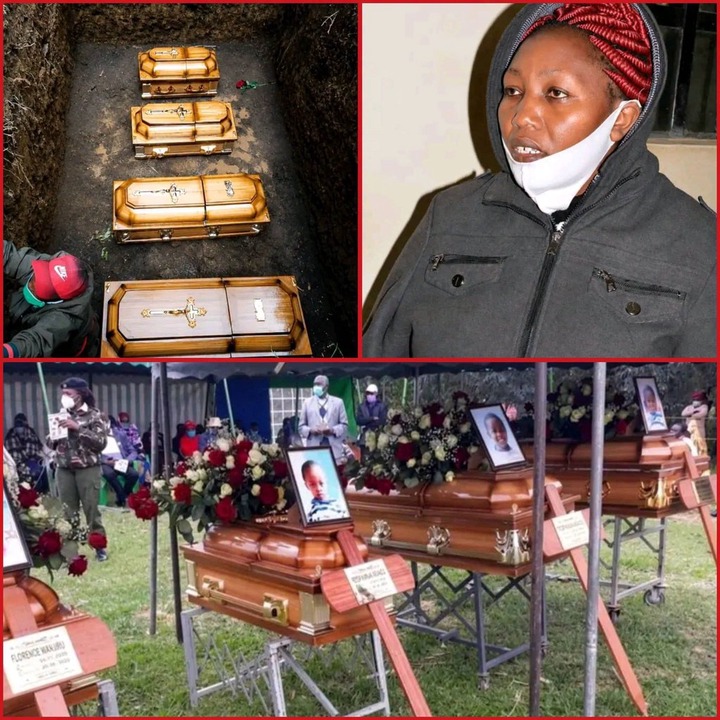
The four children were later laid to rest in Kinangop, with their coffins reportedly placed side by side in a single grave.
Their deaths devastated the family and shocked the surrounding community.
The case also drew attention to the devastating consequences that financial hardship, unemployment, relationship difficulties and untreated emotional distress can have when people are unable or unwilling to seek support.
Court sentences Mwende to life imprisonment
In March 2023, High Court Judge Grace Nzioka sentenced Mwende to life imprisonment after finding her guilty of the four murder charges.
The sentence brought a legal conclusion to a case that had left many Kenyans searching for answers about what drove a mother to kill four of her children.
The tragedy also highlighted the importance of recognising severe emotional distress and seeking professional or community support before a personal crisis escalates.
The deaths of Melody, Willy, Samantha and Whitney remain a painful reminder of the devastating consequences of family crises and the importance of early intervention when someone is experiencing overwhelming hardship.
