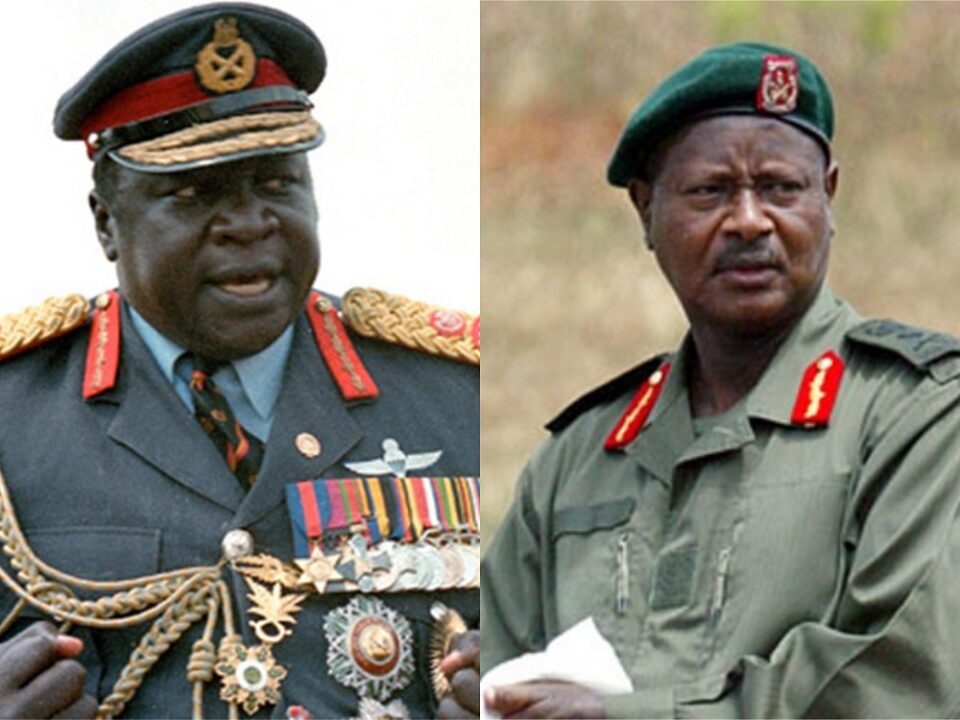
Prof Mahmood Mamdani Criticises Museveni Rule, Compares It to Idi Amin Era in New Book
Renowned Ugandan scholar Prof Mahmood Mamdani has sparked debate after comparing President Yoweri Museveni’s leadership to that of former Ugandan leader Idi Amin, arguing that both regimes contributed to what he described as a “slow poison” in Uganda’s post-independence political development.
Mamdani made the remarks during the launch of his latest book, Slow Poison: Idi Amin, Yoweri Museveni, and the Making of the Ugandan State, at the School of Oriental and African Studies (SOAS), University of London.
In the book, the celebrated political analyst and academic examines Uganda’s post-colonial political history, arguing that both Amin and Museveni have often been portrayed through simplified and distorted narratives.
According to Mamdani, Amin was internationally depicted as a “buffoon” while Museveni was presented as a reformist and revolutionary leader. However, he argues that over time, Museveni transformed Uganda into what he described as a fragmented and militarised state sustained through violence, patronage, and political control.
Mamdani claims both leaders were supported by Western powers at different stages of their rule and ultimately became what he calls “slow poison” to Uganda, although he argues Museveni’s long-term impact has been more damaging.
In the book, Mamdani identifies three major examples of what he describes as “slow poison.” These include mass killings during Amin’s rule allegedly carried out with backing from Britain and Israel, military operations in northern Uganda under Museveni’s government during the US-backed war on terror, and the fragmentation of Uganda into multiple districts along ethnic and political lines.
He also criticised privatisation policies implemented under structural adjustment programs, accusing Museveni’s government of dismantling state institutions and redistributing public assets to political allies and family networks.
“I describe the killings in northern Uganda, which could legitimately be described as genocide,” Mamdani said during the discussion.
“But I also describe how he used structural adjustment as an opportunity to dismantle and distribute family jewels, state property, to his cohorts and his family,” he added.
During the conversation moderated by Zambian scholar Prof Fareda Banda, Mamdani argued that Amin’s political journey evolved significantly after the 1971 coup that overthrew Milton Obote.
He said Western media narratives often focused only on Amin’s early years in power while ignoring later political reforms.
“The picture painted of Amin in the British and American press is basically a picture that stops in 1972,” Mamdani said.
Mamdani claimed Amin later embarked on reforms including abolishing kingdoms, promoting Uganda as a republic, introducing land reforms, and establishing one of Africa’s earliest commissions of inquiry into military abuses.
He further argued that Amin’s expulsion of Asians from Uganda in 1972 should also be understood within broader historical debates around colonial economics, race, and labour relations.
Turning to Museveni’s leadership, Mamdani said the President initially embraced violence as a liberatory political tool before later using it to consolidate state power and maintain long-term rule.
“Museveni began with an embrace of violence as a liberatory force,” Mamdani said.
“And after rapprochement with Western powers, he discovered that violence had multiple uses — not only to dismantle the state but to turn the state into a private reserve,” he added.
The scholar also criticised Museveni’s expansion of districts across Uganda, arguing that the administrative restructuring revived colonial methods of dividing communities through ethnicity and local identity.
“He chopped up the country into hundreds of districts,” Mamdani said.
“This is what I call slow poison,” he added.
Mamdani also criticised former Tanzanian President Julius Nyerere, accusing him of violating principles of non-interference by supporting efforts to overthrow Amin despite his Pan-Africanist credentials.
His remarks are expected to reignite debate about the political legacies of both Amin and Museveni, particularly amid ongoing discussions about governance, state violence, ethnicity, and political reform in Uganda.
Prof Mamdani concluded by warning against adopting universal political models imported from the West, arguing that African societies must confront the historical realities created by colonialism to build meaningful transformation.
“We were not about the question of the good life,” Mamdani said while reflecting on radical African scholarship during his years at the University of Dar es Salaam.
“We were about how the hell did we get here, and how do we get out of here?”
