Today in History: Robinah Nabbanja Became Uganda’s First Female Prime Minister
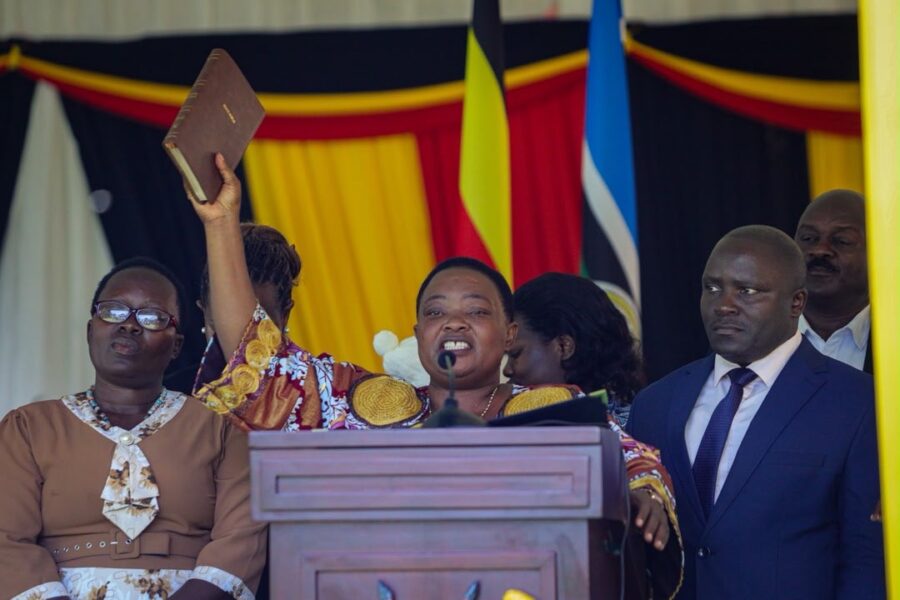
On June 21, 2021, Uganda entered a new chapter in its political history when Robinah Nabbanja was sworn in as the country’s first female Prime Minister since independence in 1962.
The historic event took place at Kololo Ceremonial Grounds during the inauguration of President Yoweri Museveni’s new Cabinet following the 2021 General Election, marking a major breakthrough for women in leadership and governance in Uganda.
A Historic Milestone for Uganda
Nabbanja’s appointment shattered a long-standing political barrier, making her the first woman to occupy the office of Prime Minister in Uganda’s post-independence history.
Her elevation from a relatively low-profile ministerial role to one of the highest offices in government was widely viewed as a significant moment for gender representation in national leadership.
The appointment also reflected President Museveni’s strategy of promoting leaders with strong grassroots connections. At the time, he described his administration as a “cabinet of fishermen,” highlighting his preference for leaders rooted in local mobilization and community engagement rather than relying solely on long-established political elites.
From Teacher to Prime Minister
Robinah Nabbanja’s journey to the premiership is one of steady political growth and public service.
A trained teacher by profession, she began her leadership career as a district councillor before serving as a Resident District Commissioner (RDC). She later entered Parliament as the Woman Member of Parliament for Kakumiro District and gradually rose through the ranks of government.
Her appointment as Prime Minister was seen as recognition of her loyalty, administrative experience, and ability to connect with ordinary citizens.
Boost for Bunyoro Region
Nabbanja’s rise to the premiership also carried significant regional importance.
Hailing from the Bunyoro sub-region, her appointment was widely interpreted as recognition of the area’s strong support for the ruling National Resistance Movement (NRM) during the 2021 elections.
Political analysts noted that her elevation increased Bunyoro’s influence within government and positioned the region more prominently in national decision-making processes.
A Hands-On Leadership Style
Since taking office, Nabbanja has become known for her practical and hands-on approach to leadership.
Unlike many previous Prime Ministers who largely operated from government offices, she frequently travels across the country to monitor government programs, inspect public projects, and engage directly with local leaders and citizens.
Her leadership has been particularly associated with overseeing the implementation of the Parish Development Model (PDM), a flagship government initiative aimed at transforming subsistence households into active participants in Uganda’s commercial economy.
She has also played key roles in coordinating disaster response efforts, social protection programs, and public service delivery initiatives.
Challenges and Political Resilience
Nabbanja’s tenure has not been without controversy.
The Office of the Prime Minister came under intense scrutiny during investigations into the Karamoja iron sheets scandal, a case involving government relief materials intended for vulnerable communities.
Despite the political pressure and public criticism that followed, she maintained the confidence of both Parliament and President Museveni, allowing her to remain in office and continue leading government business.
Continued Influence in Ugandan Politics
Five years after making history, Robinah Nabbanja remains one of the most influential figures in Uganda’s political landscape.
Her political standing was reaffirmed in May 2026 when Parliament overwhelmingly approved her continuation as Prime Minister, signaling continued confidence in her leadership.
As Uganda reflects on June 21, 2021, Nabbanja’s appointment stands as a landmark moment that reshaped the country’s political history, expanded opportunities for women in leadership, and demonstrated that high office is increasingly accessible to leaders from diverse backgrounds.
